Cybersecurity is No Longer a Moat: Why Data Collaboration is Your New Defense

Here’s the problem: hackers share everything. They trade tools, swap tricks, and sell access to compromised systems. Meanwhile, most businesses operate in silos, unaware that the same attack hitting them was stopped by another company weeks earlier.

The numbers are stark. Cyberattacks rose 30% in 2024. Once inside, attackers start spreading through your network in just 48 minutes on average. The fastest recorded? 51 seconds.

Your business can’t outpace that alone. But what if you had access to real-time warnings from thousands of other organisations facing the same threats?

That’s what collaboration offers.

The biggest wins against cybercrime all have one thing in common: teamwork.

INTERPOL’s Operation Synergia II ran from April to August 2024. Law enforcement from 95 countries worked alongside security companies like Trend Micro and Kaspersky. Together, they shut down over 22,000 malicious servers and made 41 arrests.

Operation Serengeti followed in late 2024, targeting online fraud across Africa. The result: 1,200 arrests and $100 million recovered. It worked because INTERPOL connected police, private firms, and research groups, with each contributing pieces of the puzzle.

This isn’t just about catching criminals. It’s proof that shared intelligence stops attacks faster.

The Shadowserver Foundation has done this for twenty years. They send free daily threat alerts to over 7,000 organisations in 175 countries. When Saudi Arabia’s cyber agency spotted compromised devices, they shared the information with Shadowserver. Within hours, thousands of businesses worldwide had patched the same vulnerability before hackers could exploit it.

One company’s discovery became everyone’s protection.

You don’t need a big budget to join this network. Here’s where to start.

Join regional groups. In Southeast Asia, Shadowserver works with cybersecurity agencies in Indonesia, Malaysia, Philippines, and Thailand to share threat data for free. Similar initiatives exist across Africa, the Middle East, and beyond.

Ask about partnerships. INTERPOL and many national agencies run formal programmes with private companies, sharing data, exchanging experts, and running joint operations.

This isn’t just about joining a group. It’s about how you build your technology.

Your security tools should do more than block threats. They should pull in external intelligence, match it against what’s happening in your network, and flag problems before they spread.

If you’re building custom software, whether it’s an ERP, a customer portal, or an internal app, design it with threat intelligence in mind. Standard logging formats. APIs for threat feeds. Automated alerts. These aren’t nice-to-haves. They’re how modern businesses stay protected.

Companies in the Shadowserver Alliance already do this. Partners like Mastercard, Trend Micro, and Akamai share what they see and receive real-time intelligence in return. Everyone gets stronger.

Your attackers are already collaborating. Why aren’t you?

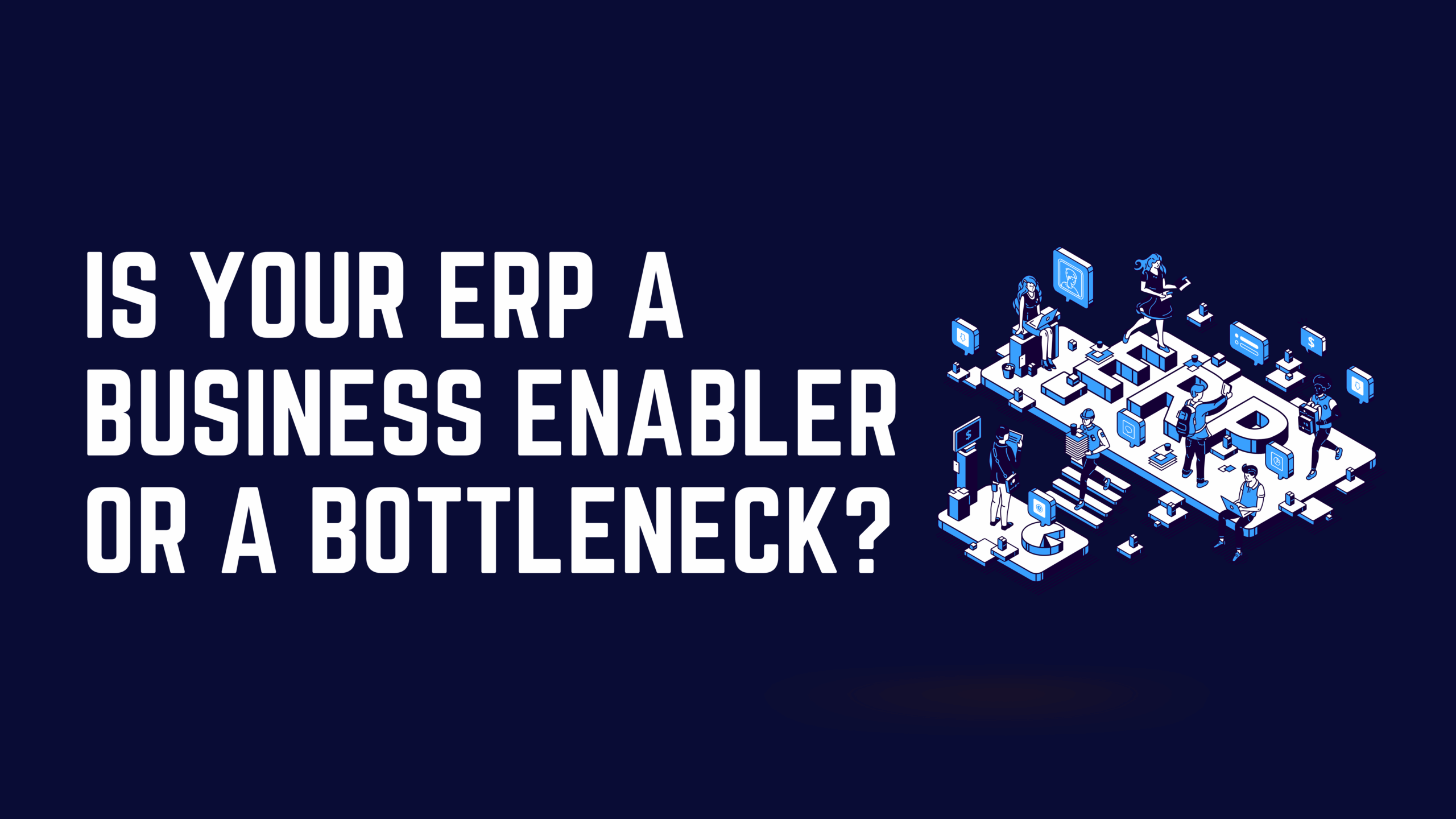
Is Your ERP a Business Enabler or a Bottleneck

Is Your ERP a Business Enabler or a Bottleneck?

Every business leader has heard the promise: implement an Enterprise Resource Planning (ERP) system, and you’ll streamline operations, gain visibility across departments, and make better decisions faster. Yet for many organisations, the reality falls far short of this vision.

Instead of empowerment, teams face frustration. Instead of insights, leadership gets incomplete data. Instead of efficiency, workflows grind to a halt as employees navigate rigid systems that don’t match how the business actually operates.

The uncomfortable truth is that your ERP system, the very technology meant to be the backbone of your operations, might be the biggest obstacle standing between your business and its potential.

This isn’t a theoretical problem. Across Brunei, Southeast Asia, and beyond, we’ve seen ambitious companies plateau not because of market conditions or talent gaps, but because their ERP has become a digital straitjacket. The question isn’t whether this is happening to your organisation. The question is: how do you know if it is?

 Here are the five most common signs that your ERP is no longer a business enabler.

A tailored ERP, in contrast, is built to conform to your workflows. If your team needs a specific report or a custom process, that functionality is built directly into the system, eliminating the need for spreadsheets.

A major red flag is when your team constantly says, “The system doesn’t let us do it that way, so we have to do it like this.” This is a profound strategic bottleneck. Your technology should be a tool to enhance your unique advantage, not erase it. For example, your organisation may have a specialised client onboarding process or a unique invoicing method that gives you a competitive edge. By forcing your business to conform to its rigid, “one-size-fits-all” workflows, your generic ERP is actively making your company less competitive. You are being forced to adopt the same “best practice” as everyone else, which by definition means you are not differentiating.

A tailored ERP is designed to protect and scale your “secret sauce.” It is built around your processes, ensuring your technology is a competitive weapon rather than a blunt instrument.

When you ask a simple question like, “What is our real-time project profitability?” or “What is our current stock level across all locations?”, a common answer is, “We can get that report for you by tomorrow.” This lack of real-time business intelligence is a fatal flaw in a fast-moving economy. Your legacy ERP is failing at its core job: to provide a single, unified view of the business. Its data is locked in siloes, and reports are slow and complex to run. This means your leadership is flying blind, making strategic decisions based on a backwards-looking, fragmented picture.

A modern, integrated ERP serves one primary purpose: to provide instant, role-based business intelligence. All data from finance, HR, and operations lives in one place, allowing a manager to see a live dashboard of the metrics that matter, not a month-old report.

Your business wants to adopt a new, modern tool, a new e-commerce platform, a mobile claims app, or an advanced analytics tool, only to discover that connecting it to your legacy ERP is a massive, complex, and expensive project. This creates a “digital island” and is the enemy of operational efficiency and scalability. In today’s API-driven world, your ERP must be a central hub that can easily connect to other best-in-class services. If your ERP makes integration a nightmare, it is preventing your business from innovating and adapting to new opportunities.

A tailored ERP is built with a modern, “API-first” architecture. It is designed to be a flexible hub, ready to integrate with other tools and scale as your business evolves.

Your initial ERP implementation was just the beginning. You are now stuck in a cycle of expensive, mandatory upgrades, paying for hundreds of user licenses you don’t fully use, and hiring costly consultants to build fragile “customisations” that break with every patch. This is a classic bottleneck. The “safe” choice of a big-name ERP has become a money pit. You are paying for a bloated, one-size-fits-all system that doesn’t fit your needs, and then paying a second time in consultant fees to try and force it to fit. This high TCO drains your budget, leaving little for true innovation.

A tailored ERP is built for your specific needs. You pay only for the modules and features you use, eliminating “licence bloat.” Modern, automated development practices have also made the cost of building custom, secure, and scalable solutions more accessible than ever before.


Your ERP should be invisible when it’s working well. Employees should think about their work, not the software. Leaders should think about strategy, not report compilation. The system should fade into the background, quietly ensuring data flows where it needs to go, intelligence appears when it’s needed, and operations run smoothly.

If your ERP is highly visible, if teams complain about it, if leadership waits for reports, if the software itself becomes a topic of regular discussion, it’s not working.

The technology at the heart of your operations should be enabling your ambitions, not constraining them. It should reflect your business logic, not forcing you to abandon it. It should be accelerating your competitive edge, not dulling it.

If it’s not doing these things, you don’t have an ERP problem. You have a strategic vulnerability.

The question is: what are you going to do about it?

5 Manual Tasks to Automate for Immediate ROI

5 Manual Tasks to Automate for Immediate ROI

“Automation” is one of the biggest buzzwords in business. It’s often associated with futuristic, complex systems, leading many organisations to believe it’s an expensive, long-term project.

The reality is different. The true cost of not automating isn’t in a missed future opportunity; it’s in the daily drain on your business right now. It’s the “death by a thousand cuts” caused by endless manual data entry, time-consuming email chains, and hours spent cross-referencing spreadsheets.

These manual tasks aren’t just slow. They are a direct source of costly errors, a drain on staff morale, and a significant barrier to achieving operational efficiency and scaling your business.

Business process automation isn’t about a five-year plan. It’s about solving today’s problems. Here are five manual tasks you can automate right now for an immediate, measurable return on investment.

The Manual Process:

Your finance team chases department heads for purchase order (PO) numbers. An invoice arrives as a PDF, which is printed, manually keyed into the accounting system, passed to a manager for physical signature, and then filed. To create an invoice, staff must manually pull data from timesheets and separate spreadsheets, a process that can take days and is highly prone to human error.

The Automated Solution:

An integrated finance module digitises the entire workflow. It uses OCR technology to read invoices, automatically matches them against digital POs, and routes them for one-click approval. For receivables, the system generates accurate invoices by pulling real-time data from project or time-tracking modules and can automatically chase late payments.

The Immediate ROI:

  • Time Saved: You can reduce the time spent on a single invoice from several days to minutes. This level of finance automation is critical; industry reports show that manual invoice processing can cost up to 10 times more than an automated system.
  • Accuracy Gained: Automatic data matching eliminates human error, duplicate payments, and incorrect billing amounts.
  • Strategic Value: Your cash flow accelerates. Instead of chasing paper, your finance team can focus on financial analysis and forecasting.

The Manual Process:

A new person is hired. Your HR team manually creates a mountain of paperwork. They email forms, chase signatures, and then re-enter that same information (name, address, bank details) into the payroll system, the IT system, and the HR system. It’s a disjointed, repetitive, and unwelcoming first-day experience.

The Automated Solution:

A structured onboarding workflow provides a secure, self-service portal for new hires to enter their information once. This single source of data is then verified by HR and automatically populates their HR profile and payroll record, eliminating redundant data entry and ensuring perfect accuracy from day one.

The Immediate ROI:

  • Time Saved: Reduces HR admin time significantly, allowing them to focus on the human side of orientation rather than data entry.
  • Accuracy Gained: Eliminates copy-paste errors by using a single, employee-verified source of data.
  • Strategic Value: It guarantees compliance (ensuring all data is verified by HR) and provides a professional, seamless experience for your new employee.

The Manual Process:

An employee emails their manager to request time off. The manager, with no immediate visibility of team schedules, has to check a wall calendar or a “master spreadsheet.” They reply with “OK,” and the employee then forwards this email to HR, who manually deducts the days from yet another spreadsheet. This workflow automation failure is slow, impossible to track, and often results in payroll errors.

The Automated Solution:

A self-service HR portal gives employees and managers a single, accurate, real-time view. Employees see their precise leave balance and submit requests digitally. Managers get instant notifications, often with team-wide calendars, to make informed approvals. Once approved, all balances and payroll records are updated instantly.

The Immediate ROI:

  • Time Saved: Eradicates the administrative busy-work for employees, managers, and HR.
  • Accuracy Gained: Provides 100% accurate, real-time leave balances, eliminating conflicts and payroll mistakes.
  • Strategic Value: You get complete visibility. Managers can plan resources effectively, and HR has an instant, accurate report on company-wide leave liability.

The Manual Process:

A sales executive returns from a trip with a wallet full of faded receipts. They manually enter each one into a spreadsheet, staple the receipts to a printout, and hand it to their manager. The manager signs it and passes it to finance, where someone has to re-enter the data into the accounting system and process the payment.

The Automated Solution:

An intelligent expense module digitises the entire process. It allows employees to submit claims with digital receipts and automatically checks their eligibility against company policy before submission. The system then routes the claim through a custom, multi-stage digital approval workflow (e.g., HR, Manager, Finance), creating a fully auditable trail and ensuring 100% compliance.

The Immediate ROI:

  • Time Saved: Slashes processing time by replacing a physical paper trail with an automated, digital workflow.
  • Accuracy Gained: This is the biggest win. By checking eligibility before submission and enforcing a multi-step approval process, the system ensures 100% compliance with company policy and eliminates improper payments. Studies from bodies like the Global Business Travel Association (GBTA) often find that a significant percentage of expense reports contain errors, and correcting a single one is costly.
  • Strategic Value: Staff are reimbursed faster, and your finance team has a complete, auditable digital trail for every claim, moving from chaotic paper-chasing to controlled financial management.

The Manual Process:

Your head of department needs a report. This kicks off a frantic scramble. An analyst must manually export data from the sales system, the finance system, and the HR system into three different CSV files. They spend half a day in Excel, cleaning the data and trying to merge it. By the time the report is ready, the data is already 48 hours out of date.

The Automated Solution:

An integrated ERP system with a central dashboard. This is the core value of an integrated, bespoke ERP. Because all your data (sales, finance, HR) lives in one system, the automated business reporting is already built. The manager simply logs in and sees a pre-configured, role-specific dashboard. They don’t see a generic wall of data; they see the exact, real-time metrics relevant to their role—live sales figures versus targets for a sales manager, or project burn-rates for an operations head.

The Immediate ROI:

  • Time Saved: Frees up your most analytical staff from being “data janitors.”
  • Accuracy Gained: You are making decisions based on live, relevant information, not a static, out-of-date spreadsheet.
  • Strategic Value: This is the ultimate automation ROI. It empowers your leadership to make faster, more intelligent decisions. You get immediate visibility into your specific area of responsibility, spotting problems and opportunities as they happen.

Automation isn’t a futuristic luxury; it’s a practical necessity for eliminating the invisible, everyday costs that slow you down. This is the practical, immediate side of digital transformation.

By automating these five manual tasks, you don’t just get faster, you get more accurate, more compliant, and more strategic. You free your most valuable asset, your people, from the drudgery of manual work and empower them to do what they were actually hired to do: think, solve problems, and grow your business.

If you’re still managing any of these processes with spreadsheets and email, it’s time to talk about workflow automation. Let’s identify the manual tasks that are costing you the most.

Book a workflow assessment with our team today