5 Signs Your Business Has Outgrown Its Current Software

You rarely get a single, clear moment that tells you your business has outgrown your software. The signs arrive slowly, disguised as small inconveniences: one more spreadsheet, one more workaround, one more report that takes a person three hours to assemble. Individually, none of them looks like a reason to change anything. Together, they are the sound of a system that no longer fits how the business actually runs.

This matters most for companies between roughly 50 and 500 staff. At that size, the software that got you here was usually chosen for a smaller, simpler version of the business. The processes have since multiplied, the volume has grown, and the tools have quietly fallen behind. The cost of that gap rarely shows up on an invoice. It shows up in hours, errors, and decisions that arrive late.

Here are five signs the gap has become real, written for the people who feel it first.

The clearest signal is the shadow system. Somewhere in your operation, a spreadsheet holds the data that the “real” software cannot model: the custom statuses, the exceptions, the handoffs between teams that the off-the-shelf tool never anticipated. People trust the spreadsheet more than the system, because the spreadsheet matches reality.

In process-heavy businesses such as logistics, construction, and professional services, this is almost universal once a company scales. The software handles the generic majority of the work. The spreadsheet absorbs the part that makes your business specifically yours. The problem is that this part is usually what drives margin, risk, and client experience, and it now lives in a file with no controls, no audit trail, and one person who fully understands it.

When a system fits the work, a new hire learns it by using it. When a system does not fit, the new hire has to learn the system and then learn the long list of exceptions to the system: the fields that mean something other than their label, the steps that have to be done in a specific order that the software does not enforce, and the things you do in Tool A and then re-enter in Tool B.

If onboarding an operations or coordination hire reliably takes weeks rather than days, the workarounds are usually the cause rather than the complexity of the work itself. The institutional knowledge required to run the business has migrated out of the software and into people’s heads, which makes the business slower to scale and dangerously dependent on whoever holds that knowledge.

Leadership decisions should wait on judgment, not on data assembly. When someone has to export from three or four systems, reconcile the mismatches by hand, and rebuild the same report every month, the business is paying a recurring tax to ask itself basic questions.

The deeper issue is timing. By the time a manually assembled report is ready, the window to act on it has often narrowed. Worse, because the assembly is manual, it is error-prone, and a single wrong figure undermines trust in the whole report. Firms in financial services and healthcare administration feel this acutely, where the reporting is not just internal but tied to compliance and client obligations. If your reporting cadence is set by how long it takes a person to compile the numbers, the software is no longer serving the decision.

Outgrowing software rarely looks like one failing system. It looks like a growing stack. The original platform stays in place because replacing it feels risky, so the gaps get filled with point tools: a separate scheduling app, a separate quoting tool, a separate tracker for the one workflow that nothing else handles.

Two costs follow. The first is the obvious one, a rising bill for licences, much of it for capacity you do not use. The second is harder to see and usually larger: these tools do not talk to each other, so people become the integrator. They copy data between systems, reconcile the differences, and chase the errors that copying creates. A stack that grows by accretion is a strong sign that no single tool fits the business anymore, and that the business has started paying people to hold the tools together.

The most expensive sign is the one that feels normal. Over time, teams stop asking the software to support their process and start changing their process to keep the software happy. The order of operations bends to the tool. Useful steps get dropped because the system cannot record them. A business that should run on its own logic ends up running on the logic of a product built for someone else.

This is the point at which generic software stops being a convenience and becomes a constraint on how the company competes. Your operational edge, the specific way you do the work better than your rivals, is exactly the part that off-the-shelf tools flatten. When the software dictates the process, the business slowly loses the thing that made it worth choosing in the first place.

Recognising that you have outgrown your software is not the same as committing to a long, expensive replacement. Those are two separate decisions, and conflating them is what keeps businesses stuck on systems they have outgrown for years. The fear of a six-figure, year-long rebuild keeps the spreadsheets in place and the workarounds growing.

A more useful first step is to identify the single workflow where the gap costs you the most, the one spreadsheet or manual process that, if it were handled properly, would remove the most friction. That is a scoped, measurable problem, not a wholesale system migration. It can be addressed on its own, proven, and built out from there.

A quick way to prioritise is to rank the signs by what they cost you when they fail. A reporting delay is an annoyance; a pricing or compliance error caught late can be a client lost or a penalty paid. Start where the failure is most expensive and most frequent, not where the fix looks easiest. The workflow that scores high on both is almost always the one to address first, and it is usually the spreadsheet that quietly runs the part of the business that everything else depends on.

If several of these signs are familiar, the question worth answering is which single process is costing you the most to leave broken, rather than whether to replace everything at once. Two reads will help you frame the next move: our build vs buy software decision guide for whether building is the right call, and our breakdown of what custom software actually costs for a mid-sized business, so the numbers hold no surprises.

Recognising the signs is the easy part. Acting on them is where most businesses stall, and every quarter of delay adds more manual hours, more fragile workarounds, and more risk concentrated in the few people who hold the system together. A short scoping call is the fastest way to break that pattern. Tell us which of these signs you recognise at tyne-solutions.com/contact/, and we will help you identify the one process worth fixing first and give you an honest read on whether a tightly scoped module is the right way to start. It is a short conversation with no obligation, built to leave you with a clear next step rather than a sales pitch.
What Custom Software Actually Costs for a Mid-Sized Business

The honest answer to custom software cost is a range, and it’s wide enough to be almost useless on its own. Quotes for what looks like the same project can vary by a factor of eight, which is why a business can ask three firms and receive $50,000, $200,000, and $400,000 for the same brief. The variation is not random. It tracks a small number of decisions that you control more than you might think. This article breaks down what mid-sized businesses actually pay in 2026, what moves the number, and why the way most people frame the question leads them to overpay or to stall entirely.

Industry benchmarks give a useful starting picture, as long as you treat them as the cost of a full build rather than the cost of getting started.

Aggregated 2026 data from Clutch puts the average custom software project at roughly $132,000, with a typical delivery timeline of around 13 months. Survey data from GoodFirms places most projects between $30,000 and $200,000, with the majority of small and mid-sized builds landing in the $30,000 to $100,000 band. For a mid-sized business specifically, a custom application with real integrations and a polished interface commonly runs from $75,000 to $250,000, while simpler internal tools sit lower, often $25,000 to $75,000.

Three things are worth noting about these figures. They describe full systems delivered over many months. They reflect mostly North American and European agency pricing. And they carry timelines long enough that the business problem you set out to solve may have shifted before the software ships. Hold that last point. It matters more than the headline number.

Custom software development cost is driven less by the technology than by scope and how the work is bought. Five factors account for most of the variation.

Feature scope. This is the single largest driver and the one most often underestimated. Every screen, every rule, every exception adds design, build, and testing time. A clear, narrow scope is the most powerful lever you have on cost, and a vague one is the most reliable way to blow a budget.

Integrations. Software rarely lives alone. Connecting to an existing ERP, accounting system, or third-party service adds work that is easy to overlook at the proposal stage and expensive to discover later. The more systems your new tool has to talk to, the higher the floor on cost.

Compliance and security. In financial services and healthcare administration, regulatory requirements are not a feature you can drop. They add cost that is non-negotiable and should be priced in from the start rather than bolted on.

Pricing model. A fixed-price contract gives you budget certainty but typically carries a 15 to 30 percent risk premium, because the vendor is pricing in the uncertainty. Time-and-materials bills for actual work, which are cheaper when the scope is well controlled and riskier when it is not.

Where the work is done. Hourly rates vary widely by region, from roughly $25 to $50 in parts of Asia, up to $120 to $220 for North American teams. Region affects the rate, but it is the scope and management quality that decide whether you get value for it.

Read the benchmarks again, and a pattern emerges. The numbers most often quoted, $150,000 and up, over timelines of a year or more, describe a project that most mid-sized businesses cannot easily approve. The budget needs board sign-off. The timeline outlasts the problem. The risk of spending six figures on a system that may not fit is exactly the risk that keeps the spreadsheets and workarounds in place for another year.

So the full-build figure does real damage, even when it is accurate. It frames custom software as a single, large, irreversible commitment, and that framing pushes capable businesses into one of two bad outcomes. They overspend on a sprawling system scoped before anyone fully understood the problem. Or they do nothing, and keep paying the compounding cost of software that no longer fits.

The framing error is treating “custom software” as one purchase. For most mid-sized businesses, it does not have to be, and pretending otherwise is what makes the price look prohibitive.

A more accurate question is narrower: what does the first useful module cost? Instead of scoping an entire system, you identify the single workflow where broken or generic software costs you the most, and you build that one piece properly. A tightly scoped first module is a fraction of a full build, both in money and in time, and it ships in weeks rather than a year. You get a working result you can measure before you commit to anything larger.

This changes the economics in two ways. First, it removes most of the risk, because you prove fit on a small, defined problem before scaling. Second, it lets the software earn its way forward. If the first module saves the hours it was meant to save, the case for the next one writes itself, funded in part by the value the first one created. The total you spend over time may still reach the figures in the benchmarks, but you spend it deliberately, in proven increments, rather than betting it all on a scope drawn up before anyone had evidence.

For a mid-sized business deciding where to start, three practical points hold.

Budget for the first problem, not the whole platform. Pick the workflow with the highest cost of staying broken, scope it tightly, and treat the first build as the thing that earns the right to the next one.

Account for the running cost. Custom software is not a one-time purchase. Annual maintenance and improvement typically runs 15 to 25 percent of the original build cost, and a vendor who omits this is hiding a real number.

Treat a low quote with the same caution as a high one. A price far below the benchmarks usually means the scope is misunderstood, the work is being cut, or the cost will reappear later as change requests. The cheapest number is rarely the right one. Look instead for the clearest scope and the most honest plan for proving value early.

Pay for the estimate to be done properly. The single biggest reason quotes vary so wildly is that most are produced before anyone has analysed the actual requirements. A short, paid discovery step, usually one to three weeks, replaces guesswork with a real architecture, identified risks, and a costed plan with a confidence range. It is a small expense that prevents the larger one of building against an estimate that was never grounded in the work. A vendor willing to scope carefully before quoting is showing you something useful about how they will run the build itself.

The benchmarks in this article describe full builds. For most mid-sized businesses, the smarter and far cheaper first question is narrower: which single process is costing you the most to run on software that no longer fits, and what would it take to fix just that one? If you are still weighing whether to build at all, our build vs buy software decision guide works through that decision.

Every month that question sits unanswered carries a real cost. The manual hours, the errors that workarounds create, and the growth your current systems cannot support all keep compounding while the decision waits, and none of it shows up on an invoice until it is large. A short scoping call ends that drift. Tell us about the process slowing you down at tyne-solutions.com/contact/, and we will help you pinpoint the one worth fixing first and give you an honest read on whether a tightly scoped module is the right next step. It is a short conversation with no obligation, and you will leave with a clearer view of the decision than most vendors provide after a full proposal.

What a Good Software Brief Looks Like

Not sure where to start with your brief? Tyne Solutions can help you scope your project properly. Get in touch.

Does Team Diversity Affect Software Quality?

The diversity conversation in technology tends to focus on workforce representation. How many women are on the team? What percentage holds leadership roles? Whether the numbers are improving.

These are legitimate questions. But for a technology buyer or project manager, they point to a more practical one: does the composition of a development team actually affect the quality of what it produces?

The short answer, based on available research, is yes. And the mechanism is more specific than most people assume.

Boston Consulting Group’s research on management diversity found that companies where women make up more than 20% of the management team generate approximately 10% higher innovation revenues than male-dominated peers. The effect is not attributed to individual capability but to the range of perspectives in the room when decisions get made.

In software development, that range matters at a very practical level. Assumptions get built into products early, in requirements gathering, in interface design, in how edge cases get prioritised. Teams whose members share the same background, context, and expectations are more likely to share the same blind spots. Those blind spots end up in the code.

This is not a hypothetical risk. Facial recognition systems that perform significantly worse on darker skin tones. Health algorithms that underweight symptoms more common in women. Voice recognition that struggles with accents, the training team did not have. These are documented outcomes of systems built without sufficient diversity in the teams that designed and tested them.

In Southeast Asia, women make up 32% of the technology workforce, higher than the global average of 28%, according to BCG and Singapore’s Infocomm Media Development Authority. Singapore sits at the upper end of the regional range, around 40%. Indonesia sits at 22%.

What makes the regional numbers notable is that they exist alongside a different figure: women make up 56% of university graduates across Southeast Asia. The gap between qualification and workforce participation is not explained by a shortage of trained people. BCG and IMDA’s research identifies three points where women exit the pipeline: degree selection, first job entry, and early career retention.

The result is a technology industry that is drawing from a narrower talent pool than the available pipeline would suggest, and producing products that reflect that narrowing.

Most vendor evaluation processes assess cost, technical capability, timeline, and past delivery. Team composition rarely appears on the scorecard.

That is a gap worth reconsidering. Not because diversity is a procurement checkbox, but because the range of perspectives on a development team has a measurable relationship to what the team produces. A vendor whose team reflects a narrow demographic slice is more likely to make unexamined assumptions about users who fall outside that slice.

Practically, questions worth adding to a vendor evaluation:

  • What does the composition of your development team look like?
  • How do you surface and challenge assumptions during the design phase?
  • Can you show examples of how you have built for users whose contexts differ from your team’s?

These are not soft questions. They are product quality questions.

The research does not suggest that a diverse team automatically produces better software. It suggests that diversity in the people making product decisions reduces the likelihood of systematic blind spots making it through to the final build.

For technology buyers in Southeast Asia, where the workforce gap between graduates and tech workers is significant and documented, the composition of a vendor’s team is a reasonable indicator of whose experiences informed the product and whose did not.

On International Women’s Day 2026, the data is worth sitting with not just as a problem to solve but as a recognition of what women in technology across Southeast Asia are already doing with less structural support than they deserve. The graduates are there. The professionals are there. The ones who stayed and built careers in an industry not always designed to keep them deserve to be seen clearly, not just counted.

6 Questions to Ask Before Signing with Any Software Vendor


Tyne Solutions builds custom software for businesses across Asia-Pacific and Europe. If you’re evaluating vendors and want a second opinion, get in touch.

The Discovery Phase: What Happens Before Code

Contact Tyne Solutions

Why 70% of Software Projects Fail (And How to Be in the 30%)


Tyne Solutions has delivered custom software projects across Asia-Pacific and Europe for over a decade. If you’re planning a software initiative and want to discuss how to structure it for success, get in touch.

Technical Debt: The Silent Project Killer

The worst part is that technical debt is invisible to most business owners until it becomes critical. The software still runs. The problems only surface when you try to change something.

Contact Tyne Solutions

Cybersecurity is No Longer a Moat: Why Data Collaboration is Your New Defense

Here’s the problem: hackers share everything. They trade tools, swap tricks, and sell access to compromised systems. Meanwhile, most businesses operate in silos, unaware that the same attack hitting them was stopped by another company weeks earlier.

The numbers are stark. Cyberattacks rose 30% in 2024. Once inside, attackers start spreading through your network in just 48 minutes on average. The fastest recorded? 51 seconds.

Your business can’t outpace that alone. But what if you had access to real-time warnings from thousands of other organisations facing the same threats?

That’s what collaboration offers.

The biggest wins against cybercrime all have one thing in common: teamwork.

INTERPOL’s Operation Synergia II ran from April to August 2024. Law enforcement from 95 countries worked alongside security companies like Trend Micro and Kaspersky. Together, they shut down over 22,000 malicious servers and made 41 arrests.

Operation Serengeti followed in late 2024, targeting online fraud across Africa. The result: 1,200 arrests and $100 million recovered. It worked because INTERPOL connected police, private firms, and research groups, with each contributing pieces of the puzzle.

This isn’t just about catching criminals. It’s proof that shared intelligence stops attacks faster.

The Shadowserver Foundation has done this for twenty years. They send free daily threat alerts to over 7,000 organisations in 175 countries. When Saudi Arabia’s cyber agency spotted compromised devices, they shared the information with Shadowserver. Within hours, thousands of businesses worldwide had patched the same vulnerability before hackers could exploit it.

One company’s discovery became everyone’s protection.

You don’t need a big budget to join this network. Here’s where to start.

Join regional groups. In Southeast Asia, Shadowserver works with cybersecurity agencies in Indonesia, Malaysia, Philippines, and Thailand to share threat data for free. Similar initiatives exist across Africa, the Middle East, and beyond.

Ask about partnerships. INTERPOL and many national agencies run formal programmes with private companies, sharing data, exchanging experts, and running joint operations.

This isn’t just about joining a group. It’s about how you build your technology.

Your security tools should do more than block threats. They should pull in external intelligence, match it against what’s happening in your network, and flag problems before they spread.

If you’re building custom software, whether it’s an ERP, a customer portal, or an internal app, design it with threat intelligence in mind. Standard logging formats. APIs for threat feeds. Automated alerts. These aren’t nice-to-haves. They’re how modern businesses stay protected.

Companies in the Shadowserver Alliance already do this. Partners like Mastercard, Trend Micro, and Akamai share what they see and receive real-time intelligence in return. Everyone gets stronger.

Your attackers are already collaborating. Why aren’t you?

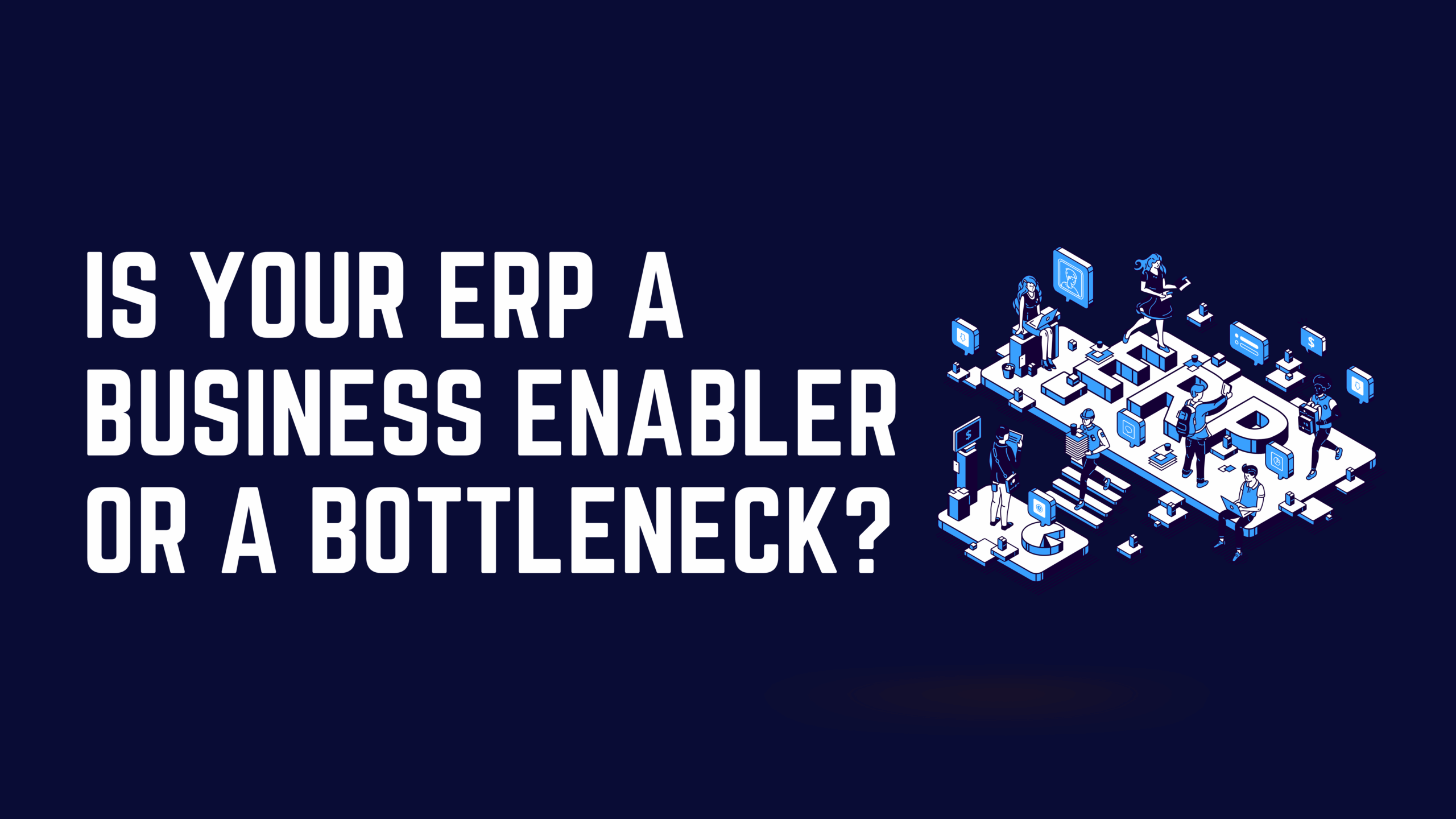
Is Your ERP a Business Enabler or a Bottleneck

Is Your ERP a Business Enabler or a Bottleneck?

Every business leader has heard the promise: implement an Enterprise Resource Planning (ERP) system, and you’ll streamline operations, gain visibility across departments, and make better decisions faster. Yet for many organisations, the reality falls far short of this vision.

Instead of empowerment, teams face frustration. Instead of insights, leadership gets incomplete data. Instead of efficiency, workflows grind to a halt as employees navigate rigid systems that don’t match how the business actually operates.

The uncomfortable truth is that your ERP system, the very technology meant to be the backbone of your operations, might be the biggest obstacle standing between your business and its potential.

This isn’t a theoretical problem. Across Brunei, Southeast Asia, and beyond, we’ve seen ambitious companies plateau not because of market conditions or talent gaps, but because their ERP has become a digital straitjacket. The question isn’t whether this is happening to your organisation. The question is: how do you know if it is?

 Here are the five most common signs that your ERP is no longer a business enabler.

A tailored ERP, in contrast, is built to conform to your workflows. If your team needs a specific report or a custom process, that functionality is built directly into the system, eliminating the need for spreadsheets.

A major red flag is when your team constantly says, “The system doesn’t let us do it that way, so we have to do it like this.” This is a profound strategic bottleneck. Your technology should be a tool to enhance your unique advantage, not erase it. For example, your organisation may have a specialised client onboarding process or a unique invoicing method that gives you a competitive edge. By forcing your business to conform to its rigid, “one-size-fits-all” workflows, your generic ERP is actively making your company less competitive. You are being forced to adopt the same “best practice” as everyone else, which by definition means you are not differentiating.

A tailored ERP is designed to protect and scale your “secret sauce.” It is built around your processes, ensuring your technology is a competitive weapon rather than a blunt instrument.

When you ask a simple question like, “What is our real-time project profitability?” or “What is our current stock level across all locations?”, a common answer is, “We can get that report for you by tomorrow.” This lack of real-time business intelligence is a fatal flaw in a fast-moving economy. Your legacy ERP is failing at its core job: to provide a single, unified view of the business. Its data is locked in siloes, and reports are slow and complex to run. This means your leadership is flying blind, making strategic decisions based on a backwards-looking, fragmented picture.

A modern, integrated ERP serves one primary purpose: to provide instant, role-based business intelligence. All data from finance, HR, and operations lives in one place, allowing a manager to see a live dashboard of the metrics that matter, not a month-old report.

Your business wants to adopt a new, modern tool, a new e-commerce platform, a mobile claims app, or an advanced analytics tool, only to discover that connecting it to your legacy ERP is a massive, complex, and expensive project. This creates a “digital island” and is the enemy of operational efficiency and scalability. In today’s API-driven world, your ERP must be a central hub that can easily connect to other best-in-class services. If your ERP makes integration a nightmare, it is preventing your business from innovating and adapting to new opportunities.

A tailored ERP is built with a modern, “API-first” architecture. It is designed to be a flexible hub, ready to integrate with other tools and scale as your business evolves.

Your initial ERP implementation was just the beginning. You are now stuck in a cycle of expensive, mandatory upgrades, paying for hundreds of user licenses you don’t fully use, and hiring costly consultants to build fragile “customisations” that break with every patch. This is a classic bottleneck. The “safe” choice of a big-name ERP has become a money pit. You are paying for a bloated, one-size-fits-all system that doesn’t fit your needs, and then paying a second time in consultant fees to try and force it to fit. This high TCO drains your budget, leaving little for true innovation.

A tailored ERP is built for your specific needs. You pay only for the modules and features you use, eliminating “licence bloat.” Modern, automated development practices have also made the cost of building custom, secure, and scalable solutions more accessible than ever before.


Your ERP should be invisible when it’s working well. Employees should think about their work, not the software. Leaders should think about strategy, not report compilation. The system should fade into the background, quietly ensuring data flows where it needs to go, intelligence appears when it’s needed, and operations run smoothly.

If your ERP is highly visible, if teams complain about it, if leadership waits for reports, if the software itself becomes a topic of regular discussion, it’s not working.

The technology at the heart of your operations should be enabling your ambitions, not constraining them. It should reflect your business logic, not forcing you to abandon it. It should be accelerating your competitive edge, not dulling it.

If it’s not doing these things, you don’t have an ERP problem. You have a strategic vulnerability.

The question is: what are you going to do about it?